
There is a particular feeling that comes with opening the door to a house you haven’t seen in a while.
Hopefully, it’s mostly a good one.
Your Outer Banks second home has been sitting there waiting for you, but an empty house doesn’t really stay frozen in time.
Dust settles.
The air changes.
Sand somehow appears despite nobody being there to bring it inside.
A few bugs may have found the place before you did.
And occasionally something just doesn’t look quite the way you remember leaving it.
None of this means there’s a serious problem.
It just means arrival day goes a lot better when the house gets a little attention first.
An Empty House Still Gets Dirty
One of the strange things about a second home is how much cleaning it can need when nobody has been using it.
There aren’t dishes stacked in the sink or towels on the bathroom floor.
Instead, it’s the quieter stuff.
Dust on furniture.
Dead bugs near windows.
Floors that don’t feel quite clean anymore.
Outdoor dirt around entrances.
A little film on counters and surfaces.
Maybe some sand.
Probably some sand.
Homes don’t need people inside them to collect all of that.
So if a house has been closed for a while, a quick reset before arrival can make the difference between walking in and immediately getting to work or actually feeling like you’ve arrived.
Humidity Deserves Some Attention
Living near the coast means moisture is part of the conversation.
Especially during the warmer months.
A closed house can feel different when you first walk inside. Sometimes it’s simply the temperature. Other times, the air feels heavier or the house smells a little stale.
That is worth paying attention to.
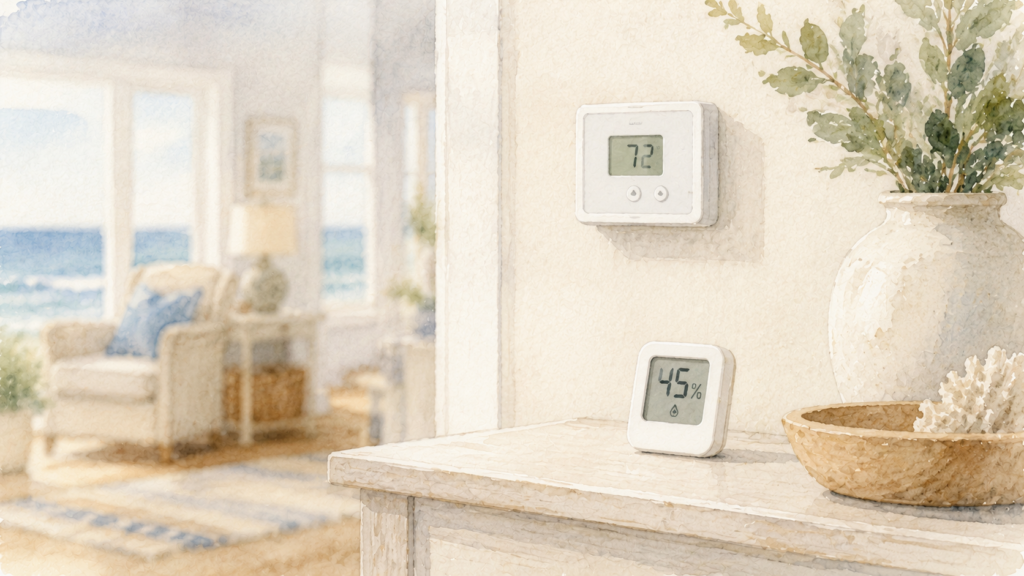
The U.S. Environmental Protection Agency recommends keeping indoor relative humidity below 60 percent when possible, ideally between 30 and 50 percent, because excess moisture can contribute to mold growth.
For a second-home owner, that makes the thermostat and indoor humidity more than just comfort settings.
If you use a smart thermostat or humidity monitor, checking it before you start the drive can give you an idea of what has been happening inside the house while you’ve been away.
Then when you arrive, you’re not starting completely blind.
Start With the First Five Minutes
Before unpacking the car, take a walk through the house.
Not an inspection.
Just look around.
Does the house smell normal?
Is anything obviously out of place?
Are there signs of water where you wouldn’t expect them?
Do the rooms feel unusually humid?
Are the refrigerator and other appliances you expect to be running actually running?
Does anything immediately need attention before you settle in?
Most of the time, the answer will hopefully be no.
That’s good.
But those first few minutes are easier before luggage, groceries, beach bags and everyone else start moving through the house.
Kitchens and Bathrooms Usually Tell You a Lot
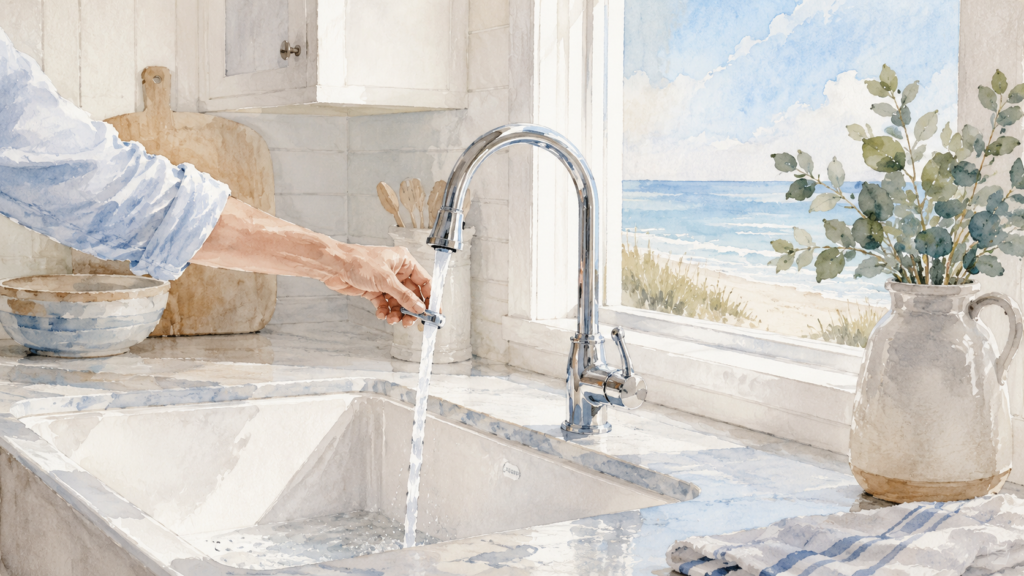
If a house has been sitting, the kitchen and bathrooms are good places to spend a few extra minutes.
Look around sinks and plumbing fixtures for anything unusual.
Run the faucets.
Flush the toilets.
Open the refrigerator.
Check surfaces.
Look inside the shower or tub.
Again, this isn’t about pretending to be a plumber or home inspector.
You’re simply waking the house back up.
If something doesn’t seem right, you can deal with it before the house is full of people.
It’s considerably less annoying to discover an issue at 2 p.m. than at 10:30 that night.
Sometimes a Regular Clean Isn’t Enough
There is a difference between maintaining a house that is used every week and reopening one that has been sitting for a season.
If it’s only been a short time, a standard cleaning may be all it needs.
After a longer stretch, there may be more to do.
Baseboards collect dust.
Ceiling fans do too.
Window areas need attention.
Cabinets and less frequently touched surfaces can start looking neglected.
Porches and entry areas take whatever the coast has decided to throw at them.
That’s where a deeper seasonal clean can make more sense than trying to squeeze everything into a normal maintenance visit.
The goal isn’t to clean things just for the sake of cleaning them.
It’s to get the house back to the point where maintaining it becomes easy again.
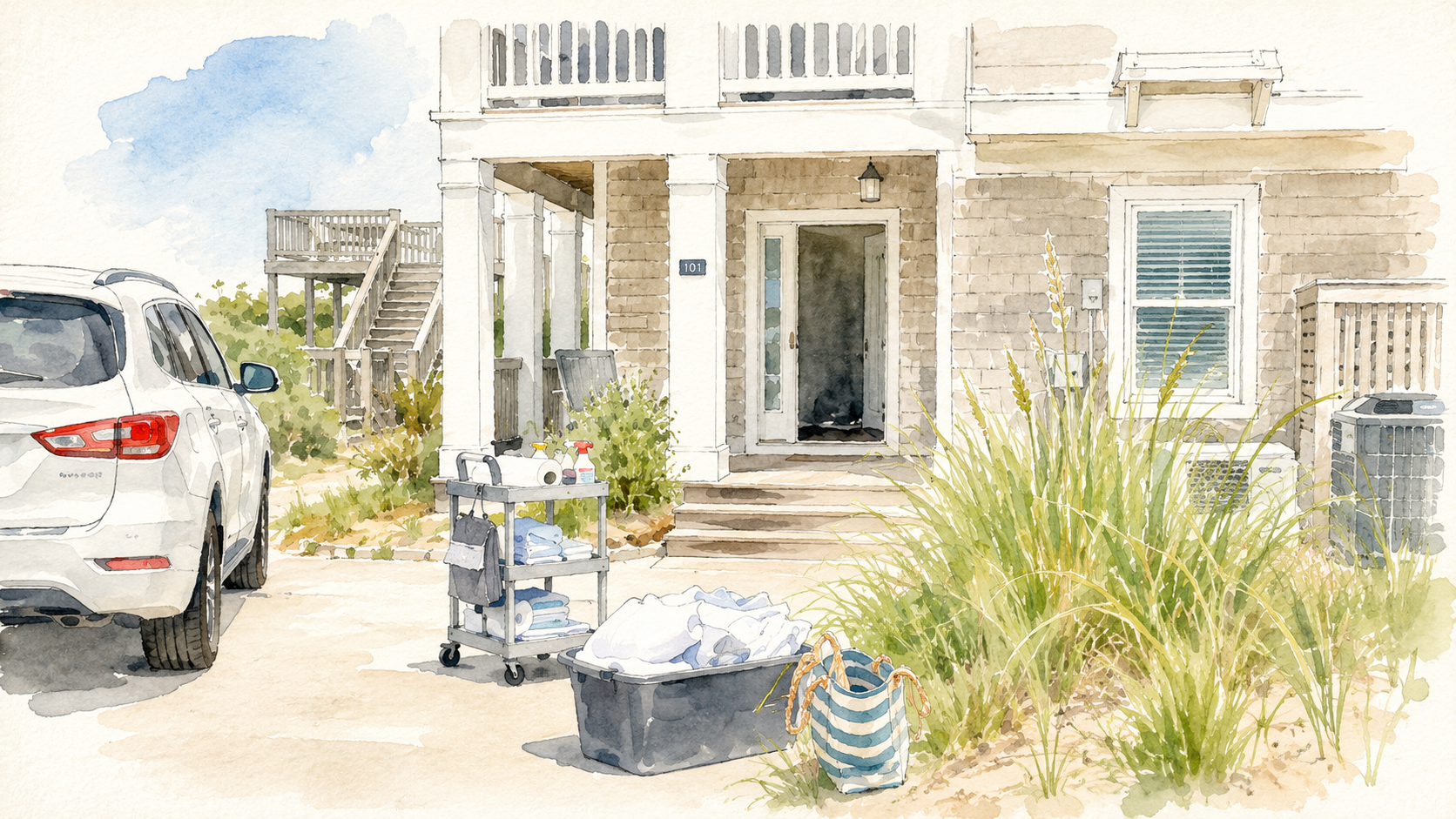
Don’t Forget the Outside Before You Walk In
The inside of the house tends to get most of the attention, but your arrival starts before the front door.
Take a look at the entrance.
Did wind move anything?
Are the outdoor chairs where you left them?
Does the porch need sweeping?
Did leaves, sand or debris collect around the doorway?
Are the trash cans where they should be?
Nothing here has to be dramatic to make the property feel neglected when you first pull up.
A swept entry and a house that looks put together make arrival feel considerably different.
Sometimes the smallest reset has the biggest effect.
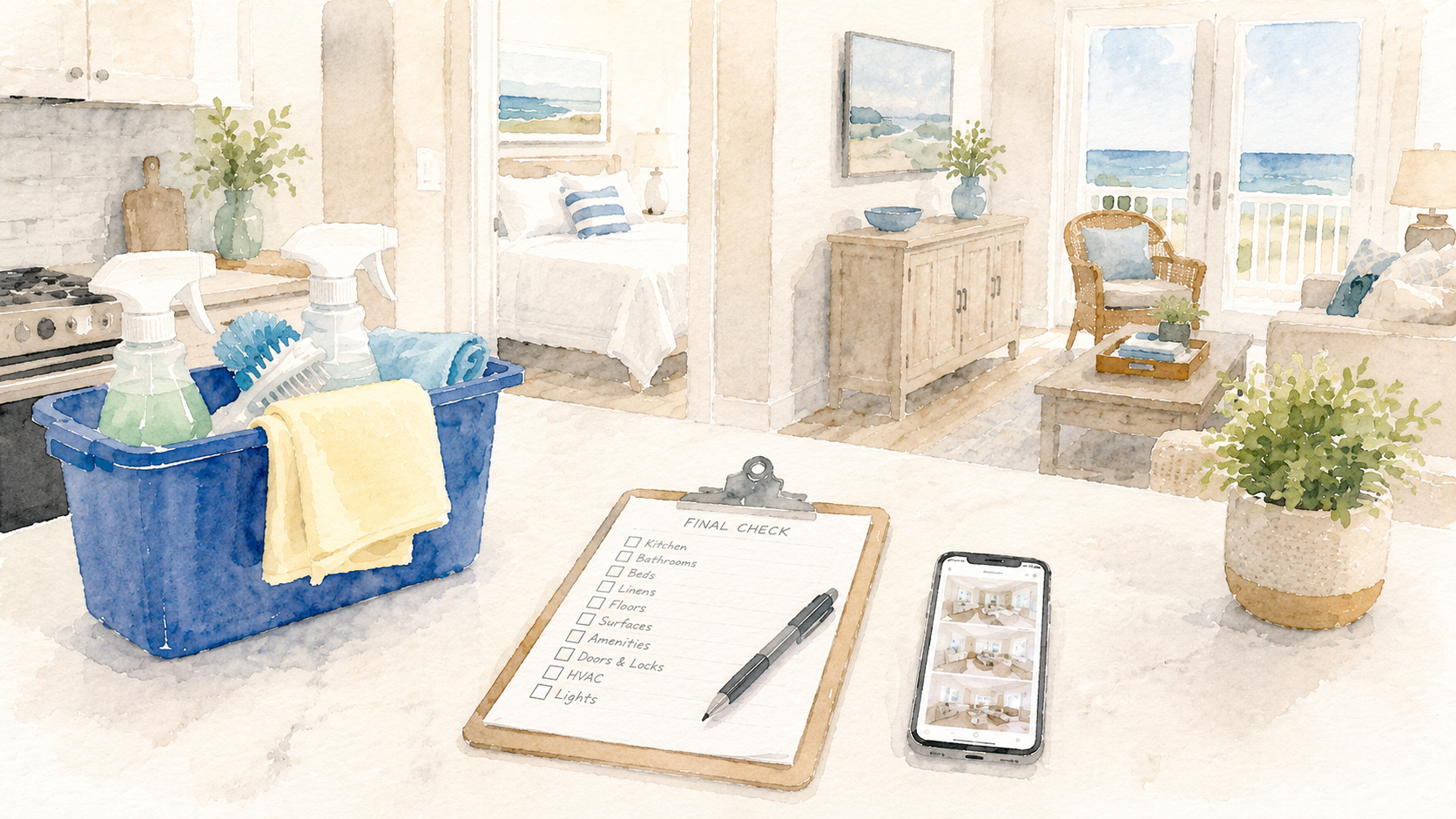
Make the Beds Before You Need Them
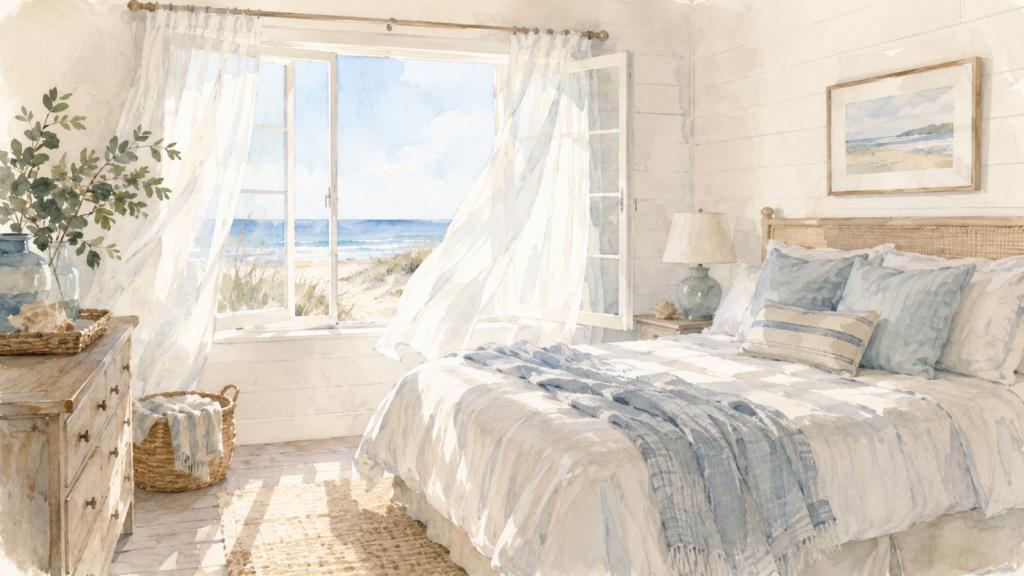
There are few things less appealing after a long drive than realizing the beds still need to be dealt with.
If linens have been stored, decide whether they need to be refreshed before use.
Make the beds.
Put clean towels where they belong.
Reset the bathrooms.
Get the kitchen ready.
Then stop.
The point isn’t turning your second home into a hotel room.
It’s removing the chores that stand between arriving at the house and actually enjoying being there.
A Little Preparation Changes Arrival Day
There are two versions of arriving at a second home.
In the first one, you open the door and immediately start making a mental list.
Vacuum.
Wipe this down.
Find the sheets.
Check the bathroom.
Sweep the porch.
Figure out why that chair is over there.
In the second, you put down your bags.
That’s the better version.
Preparing an Outer Banks second home before arrival isn’t about making everything perfect.
It’s about dealing with the predictable little things before they become your first afternoon back.
The house has been waiting.
You shouldn’t have to spend your first few hours catching up with it.